
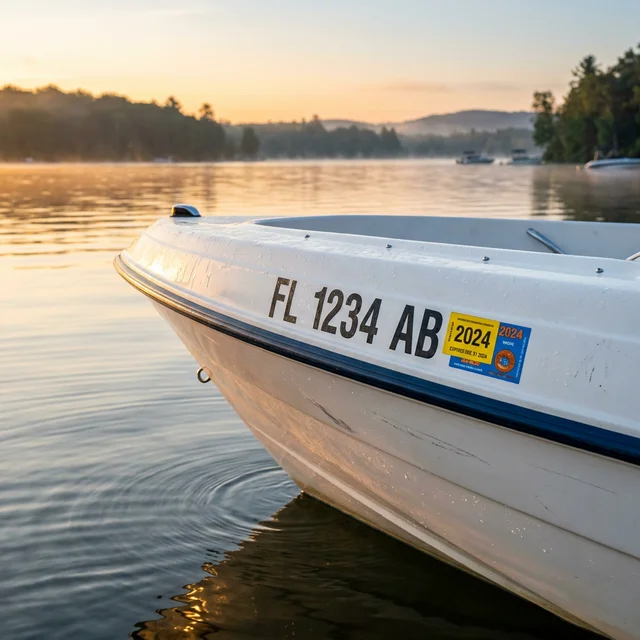
Renewal Periods by State
Boat registration renewal periods vary significantly across the United States. Understanding your state's renewal cycle is essential to avoid operating with an expired registration.
Annual Renewal States (1 Year)
These states require annual registration renewal:
- Washington — Expires June 30 each year
- Arizona — Expires December 31
- Colorado — Expires December 31
- Idaho — Expires December 31
- Hawaii — Annual renewal
- Connecticut — Expires April 30 of the following year
Annual or Biennial Renewal States
- Florida — 1- or 2-year options available; expires on the birthday of the primary registrant
- Alabama — Annual renewal; expiration is staggered by the first letter of the owner's last name: A/D in January, B in February, C/E in March, F/G/N in April, H/O in May, M/I in June, P/L in July, J/K/R in August, Q/S/T in September, and U-Z in October
Biennial Renewal States (2 Years)
- Texas — 2-year registration cycle
- California — 2-year cycle; expires December 31 of odd-numbered years
- Maryland — 2-year registration cycle
Triennial Renewal States (3 Years)
- Michigan — 3-year cycle; expires March 31
- Minnesota — 3 calendar years
- Wisconsin — 3-year registration cycle
- Ohio — 3-year cycle; expires March 1
- New York — 3-year registration cycle
- North Carolina — 1- or 3-year options
- Arkansas — 3-year registration cycle
- Georgia — 3-year registration cycle
- Louisiana — 3-year registration cycle
How to Renew Your Registration
Online Renewal
The fastest and most convenient option. Most states now offer online renewal through their DMV, DNR, or wildlife agency websites.
- Visit your state agency's website
- Enter your registration number or create an account
- Verify your vessel information
- Pay the renewal fee by credit or debit card
- Print or save your temporary renewal certificate
- Your new decals will be mailed within 2-3 weeks
Mail-In Renewal
- Complete the renewal form (often included with your renewal notice)
- Include a check or money order for the renewal fee
- Mail to your state agency's designated address
- Allow 2-4 weeks for processing
In-Person Renewal
- Visit your state agency office, DMV, or authorized dealer
- Bring your current registration certificate
- Pay the renewal fee
- Receive new decals immediately
Renewal Fees
In most states, renewal fees are the same as the initial registration fee. Here are some notable examples:
| State | Minimum Renewal Fee | Renewal Period | Annual Cost |
|---|---|---|---|
| Florida | $5.50 | 1 year | $5.50/yr |
| Arkansas | $7.50 | 3 years | $2.50/yr |
| Delaware | $20.00 | 1 year | $20.00/yr |
| Michigan | $14.00 | 3 years | $4.67/yr |
| Texas | $32.00 | 2 years | $16.00/yr |
| Maryland | $70.00 (as of Oct 2025) | 2 years | $35.00/yr |
Maryland increased fees significantly in October 2025 (from $24 to $70 for 2-year registration, title fee from $2 to $20, and state use sticker from $10 to $70), the first increase since 1983. Revenue supports the Waterway Improvement Fund for dredging and boat ramp upgrades.
For a complete fee comparison, see our state-by-state fee comparison.
Late Renewal Penalties
Operating a boat with an expired registration is a violation in all 50 states. Consequences can include:
Financial Penalties
- Late fees: Many states charge an additional penalty for renewing after the expiration date
- Fines for operating unregistered: Can range from $25 to $500 or more
- Re-registration fees: Hawaii charges 2x the original issuance fee for re-registration after cancellation
Other Consequences
- Citation by law enforcement: Marine patrol officers regularly check registration status
- Impoundment: In severe cases, your vessel may be impounded
- Insurance issues: Operating an unregistered vessel may void your boat insurance coverage
Pro Tips for Smooth Renewal
- Keep your registration documents accessible — Store copies digitally and keep originals on the boat
- Update your address when you move — Renewal notices go to the address on file
- Renew early when possible — Many states allow renewal 30-60 days before expiration; Washington allows renewal starting January 1 for the June 30 deadline
- Use online services — Online renewal is available in most states and is the fastest option
- Check for fee changes — States occasionally update their fee schedules; Maryland increased fees to $70 (2-year) starting October 2025
- Verify your vessel information — Report any changes to length, motor, or hull configuration at renewal time
Frequently Asked Questions
When should I renew my boat registration?
Check your state's expiration date. Most states allow renewal 30-60 days before expiration. Some states like Colorado allow renewal up to 45 days early.
Can I renew my boat registration online?
Yes, most states offer online renewal. Visit your state's DMV, DNR, or wildlife agency website for online renewal services.
What happens if I forget to renew?
Operating with an expired registration can result in fines and citations. Late fees may also apply. In Hawaii, re-registration after cancellation costs 2x the original fee.
Do I need to have my boat inspected for renewal?
Generally, no. Renewal typically only requires payment of the fee and confirmation that your vessel information is still accurate.
Can I renew by mail?
Yes, most states accept mail-in renewals. Include the completed renewal form and payment by check or money order. Allow 2-4 weeks for processing.