
What Is a Boat Lien Release?
A boat lien release is written proof, in a format the agency accepts, that a lender, bank, credit union, marina, or other secured party has released its claim against the vessel. A payoff quote, payoff receipt, or paid-in-full note can support the file, but it may not be enough by itself to remove a lien from a state title record or a documented-vessel mortgage record.
When a Lien Release Is Needed
A lien release is commonly needed when the title lists a lender, the seller says the boat was financed, the current registration references a secured party, the boat is federally documented with a recorded mortgage, or the buyer's state agency sees a lien during transfer review.
This guide is about clearing a known or suspected lien. If you are still trying to find out whether a lien exists, start with the boat lien check guide. State title records and federal documentation records can be separate systems, so a documented boat may need both state paperwork review and USCG/NVDC mortgage review.
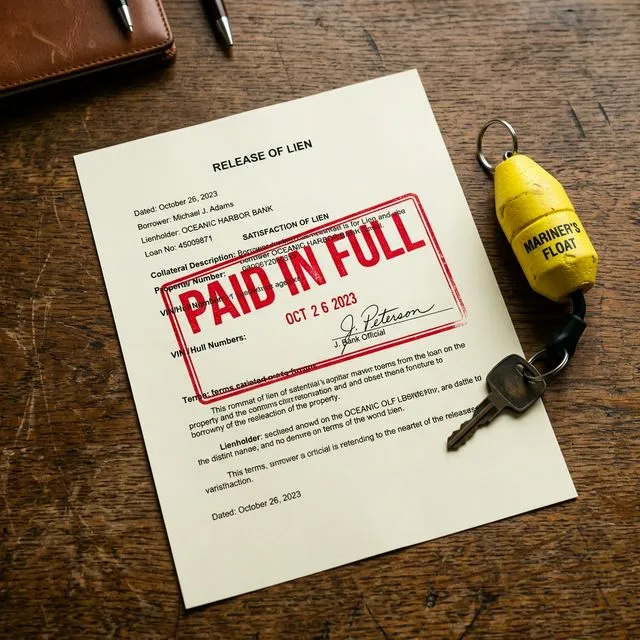
What Proof to Request
- State lien-release form or lender release letter from the recorded lienholder, using the state agency's accepted format when available.
- Updated state title or electronic title record showing the lien removed, if the state title system supports it.
- Payoff quote or receipt showing the amount, deadline, and lender instructions when closing before final release is complete. Keep this separate from the final release document.
- USCG/NVDC satisfaction or release of mortgage evidence if the vessel is documented and a preferred mortgage or other recorded mortgage appears in federal records.
- Seller authorization if the buyer, closing agent, or documentation service needs to confirm payoff directly with the lender.
Some agencies require original signatures, notarization, direct lender submission, or a specific state form. Confirm the accepted format before treating a scanned letter or generic receipt as final proof.
Closing When a Loan Still Exists
If the seller still owes money, structure the closing so payoff and transfer are connected. A common path is to pay the lender directly for the payoff amount and pay the seller only the remaining equity after lien-release instructions are confirmed.
For high-value boats, consider using an escrow service, marine closing agent, documentation service, or attorney familiar with vessel transfers. This is especially important when the boat is documented, financed, located out of state, or owned by a business.
After the Release Is Issued
After the lienholder releases the claim, submit the release with the title transfer or registration packet. Keep a copy with your permanent vessel records. If the state issues a new title, review it as soon as it arrives and confirm no old lender remains listed.
For related steps, use the boat lien check guide, boat bill of sale guide, missing boat title guide, USCG documentation guide, and boat title transfer guide.
Frequently Asked Questions
Is a payoff receipt the same as a lien release?
Not always. A payoff receipt may show money changed hands, but the state agency or NVDC record may still require an accepted lien release, title update, or mortgage satisfaction.
Can a buyer file a boat title transfer with an old lien listed?
Usually the lien must be cleared or carried forward correctly. If the lien should be gone, get release proof before filing the transfer.
Who provides the lien release?
The lienholder or secured party provides the release. The seller should coordinate it because the seller is usually the borrower or recorded owner.
What if the lender is out of business?
Ask the state titling agency what substitute proof it accepts. You may need successor-lender records, agency review, court paperwork, or a bonded-title process.
Does USCG documentation change lien-release steps?
It can. Documented vessels may have federal mortgage records separate from state registration or tax files, so check both systems when the vessel is documented.
Can a bill of sale clear a boat lien?
No. A bill of sale can describe the lien condition or attach release proof, but it does not remove a recorded lien by itself.