

What Is USCG Documentation?
Direct answer: USCG vessel documentation is a federal system, administered through the National Vessel Documentation Center (NVDC), for vessels that meet federal ownership, citizenship, and tonnage rules. For recreational owners, it is most common on eligible financed vessels, larger cruisers, and boats that may travel internationally.
Documentation can replace state bow numbers for identification display, but it does not remove all state obligations. Many states still require documented vessels to be registered for tax, use, decal, or local enforcement purposes.
Why the system exists
Federal vessel documentation establishes nationality, supports federal recording of certain mortgages and liens, and provides a consistent identification system for eligible vessels. Recreational owners usually consider documentation because a lender requires it, because they want federal documentation for international cruising, or because they prefer the documented-vessel display format.
Who Is Eligible?
To be eligible for USCG documentation, your vessel must meet federal requirements. The two most important filters for recreational owners are tonnage and ownership, but the chosen endorsement also matters.
- At least 5 net tons — net tons measure vessel volume, not weight. Length can be a rough clue, but length alone does not prove eligibility.
- Eligible U.S. ownership — a Certificate of Documentation generally requires the vessel to be wholly owned by eligible U.S. citizens or entities for the endorsement requested.
- Not documented elsewhere — a vessel documented under another country's laws cannot also be documented with the USCG unless the foreign documentation issue is resolved.
- Proper evidence of ownership — the NVDC will require acceptable ownership documents, such as a bill of sale, builder's certification, prior certificate, or state title depending on the transaction.
- Correct endorsement — recreational, coastwise, fishery, registry, and other endorsements have different use and eligibility rules.
Vessel types that may be documented
- Sailboats and powerboats that measure at least 5 net tons
- Yachts and larger recreational cruisers
- Commercial fishing vessels that meet endorsement rules
- Vessels used in coastwise trade where federal documentation is required
Benefits of USCG Documentation
For recreational vessels
- International cruising support — documentation serves as evidence of U.S. nationality for the vessel.
- Lender preference — many marine lenders require documentation because it allows a Preferred Ship Mortgage to be recorded federally.
- Clean hull display — documented vessels display name and hailing port rather than state bow numbers.
- Federal ownership record — documentation provides a federal certificate and record history for eligible vessels.
For commercial vessels
- Documentation may be required for certain coastwise, fishery, registry, and trade uses
- Commercial endorsements can be restricted by citizenship, build, and use rules
- Financing, lien recording, and operating authority often depend on the correct endorsement
Do not choose documentation only for appearance. If your state still requires a documented-vessel decal or registration fee, your annual cost and paperwork may be higher than state registration alone.
Documentation vs. State Registration
| Feature | USCG Documentation | State Registration |
|---|---|---|
| Administered by | U.S. Coast Guard NVDC | State DMV, DNR, fish and wildlife, or tax agency |
| Eligibility | Eligible vessels of 5+ net tons meeting ownership and endorsement rules | Usually required for motorized vessels and many sailboats |
| Hull display | Federally documented vessels follow name, hailing-port, and official-number marking rules | State-numbered vessels display registration numbers on both sides of the bow |
| Fees | Federal NVDC fees; confirm current fee schedule before filing | State fees vary by length, type, location, and term |
| Lien recording | Preferred Ship Mortgage can be recorded federally | State title or lien system where available |
| International travel | Useful as proof of U.S. vessel nationality | Not the same as federal documentation |
| Financing | Often required for larger marine loans | May be enough for smaller or state-titled boats |
How to Apply for USCG Documentation
Initial documentation
- Determine eligibility — verify that the vessel measures at least 5 net tons and meets ownership rules for the endorsement you need.
- Collect ownership evidence — bill of sale, builder's certification, state title, prior Certificate of Documentation, or other NVDC-accepted evidence.
- Complete the correct NVDC form — initial issue, exchange, replacement, transfer, and mortgage filings use different forms.
- Resolve liens and title issues — lenders and prior owners may need to sign documents before the application can be accepted.
- Submit through NVDC — use the official NVDC channel or a documentation service you intentionally choose.
- Pay current fees — use the current NVDC fee schedule rather than relying on an old mailer or third-party renewal notice.
Renewal
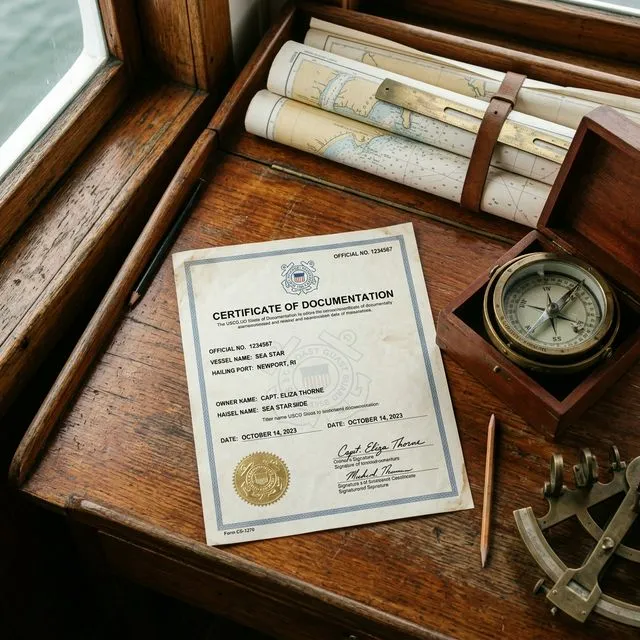
Recreational documentation can be renewed through the NVDC. Current NVDC schedules have offered multi-year recreational renewal terms, but fee amounts and options should be checked against the latest official schedule before filing.
Renew early enough to avoid expiration issues, especially if the vessel is financed, traveling internationally, or being sold. Keep copies of the submitted renewal and payment confirmation until the new certificate is issued.
Processing time
Processing times vary with NVDC workload, application completeness, ownership complexity, and mortgage filings. Missing signatures, incorrect forms, or unresolved lien documents are common causes of delay.
Costs and Fees
Direct answer: USCG documentation cost is not one flat boat-registration fee. NVDC fees depend on the transaction, and government fees are separate from any private documentation-service charge. As of the official NVDC fee schedule revised September 2025, common recreational items include $133 for initial documentation, $26 per renewal year, $84 for an exchange or return to documentation, $50 for replacing a lost or mutilated Certificate of Documentation, and $4 per page for mortgages and related instruments.
| Fee category | Current example | What to verify |
|---|---|---|
| Initial issue | $133 for a 1-year commercial or recreational Certificate of Documentation | Endorsement and ownership-document requirements |
| Recreational renewal | $26 per year; multi-year recreational examples include $52, $78, $104, and $130 for 2 through 5 years | Available term, deadline, and late-renewal handling |
| Exchange or return | $84 for exchange of documentation or return to documentation | Whether name, hailing port, ownership, or endorsement changes require extra consent or documents |
| Replacement certificate | $50 for a lost or mutilated Certificate of Documentation | Replacement form and delivery method |
| Mortgage or lien filing | $4 per page for mortgages and related instruments; other lien documents can be priced separately | Page count, mortgagee consent, and satisfaction or release filings |
| Record searches | $25 for an Abstract of Title | Whether you need an abstract, certified copy, or other record before a sale or payoff |
Third-party documentation companies charge their own service fees on top of government fees. They can be useful for complex transactions, but many renewal mailers look official even though they are private services. If you only need a straightforward renewal, compare the service price with the official NVDC option before paying.
Documented Vessel Marking Requirements
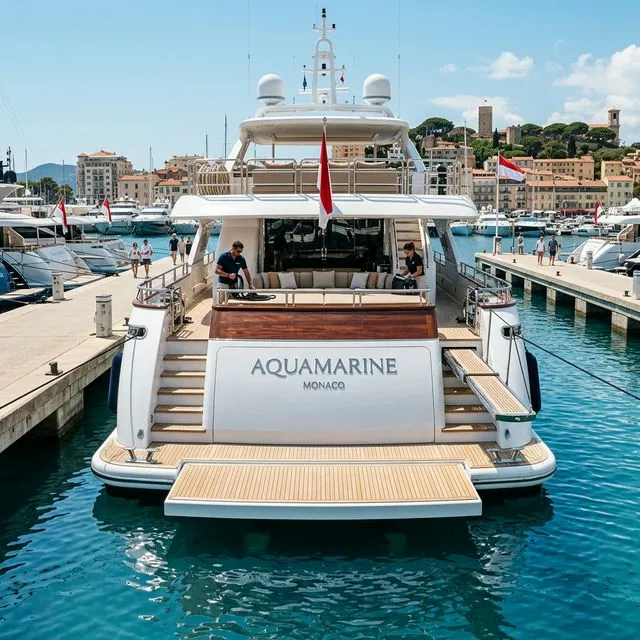
Documented vessels are marked differently from state-numbered vessels. For recreational vessels documented exclusively for pleasure, the vessel name and hailing port are displayed together on a clearly visible exterior part of the hull. Other documented-vessel endorsements can have different name and hailing-port placement rules.
- Name and hailing port: many recreational documented vessels use the stern, but the rule depends on the vessel's documented use.
- Lettering: use legible letters that meet the federal documented-vessel marking rules.
- Official number: mark the official number inside the vessel on a clearly visible structural part of the hull.
- Number format: the official number is preceded by NO. and uses block Arabic numerals at least 3 inches high.
- Permanence: the official number marking should be durable and not easy to remove or alter.
- State decals: if your state requires a documented-vessel decal, place it exactly where the state agency instructs.
Do not put a state bow number on a documented vessel unless the state agency specifically requires it. For many documented recreational vessels, the visible exterior identity is the vessel name and hailing port, not the state registration number format.
When Documentation May Not Be Worth It
USCG documentation is useful for the right vessel, but it is not automatically better for every boat. State registration may be simpler when:
- The vessel is under 5 net tons and is not eligible
- The boat is used only on local inland waters
- No lender requires a Preferred Ship Mortgage
- You do not plan international travel
- Your state still charges the same registration or use fees for documented vessels
- You want the lowest-paperwork option for a small trailer boat
If you are buying a boat, ask the seller whether it is currently documented, state titled, financed, or subject to a recorded mortgage. Documentation, title, lien, and registration records need to line up before closing.
Documentation Decision Paths
Frequently Asked Questions
Do I still need state registration if my boat is federally documented?
In many states, yes. A documented vessel may display its name and hailing port instead of state bow numbers, but the state may still require registration, tax payment, or a validation decal. Check the state where the vessel is principally used.
Can I get USCG documentation for a boat under 25 feet?
Usually no, but the legal test is net tonnage, not length alone. USCG documentation requires at least 5 net tons. Many boats under about 25 feet will not qualify and must use state registration.
How is a documented vessel identified?
Documented vessels display the vessel name and hailing port on the exterior hull, commonly on the stern. The official documentation number is permanently marked on a visible interior structural part of the vessel.
Is USCG documentation required for ocean travel?
Not for every recreational trip, but documentation is useful for international cruising because it serves as evidence of U.S. vessel nationality. Confirm destination-country entry requirements before departure.
Where do I renew USCG documentation?
Renew USCG documentation through the National Vessel Documentation Center. Avoid third-party renewal mailers unless you intentionally want a paid service.