
Quick Answer for Homemade Boats
To register a homemade boat, start with the state agency that will issue the registration or title. Your agency may ask for an application, builder statement, material receipts, photos, an inspection or photo review, a state-assigned HIN, tax or fee payment, and title paperwork if the boat is titleable.
There is no national homemade-boat fee or timeline. Expect the normal state registration fee plus any HIN assignment, inspection, title, tax, or document-review step your agency lists.
State Page vs This Guide
Use the state page when the question becomes exact filing facts: agency link, state fee, title rule, renewal timing, tax handling, or a state-specific HIN packet.
Use this homemade-boat guide when you need the support workflow: builder records, receipts, photos or inspection, state-assigned HIN, used-boat handoff, and trailer separation.
Documents to Gather
- Builder statement describing who built the boat, when, and from what materials.
- Receipts for hull materials, kits, major components, motor, and trailer if included.
- Photographs of the hull, interior, transom, motor mount, and finished vessel.
- Inspection form or appointment if the state wants physical verification or photo review before assigning a HIN.
- Tax proof for materials, kit purchase, or private-sale purchase when the agency asks for it.
- Title or registration application using the state homemade-vessel process.
If you bought an unfinished or already-completed homemade boat from another person, also prepare the used-boat ownership trail: bill of sale, seller identity, prior registration if any, lien release if needed, and any missing-title explanation the state accepts.
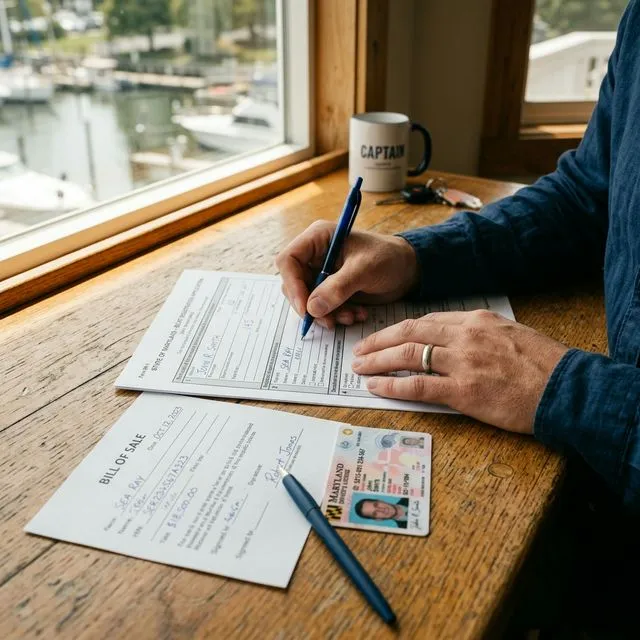
HIN Assignment and Inspection
Most registration agencies will need a valid Hull Identification Number or state-assigned HIN before approving a homemade boat. Federal HIN rules govern the identifier format, but a homemade boat without a valid manufacturer HIN must follow the state agency's assigned-HIN process.
The state may use inspection, photographs, affidavits, receipts, or other verification tools before it assigns or approves the HIN. Ask the agency whether it wants photos, receipts, an inspection appointment, or a HIN application before you buy numbers or decals.
Registration and Title Steps
- Contact the state agency before filing to confirm the homemade-vessel packet and HIN path.
- Prepare proof of construction, materials, ownership, tax handling, and seller documents if the boat came from another person.
- Complete inspection or HIN assignment if the agency requires it.
- Submit application and fees for registration, title, tax, or document review if your state requires those steps.
- Display assigned numbers and decals only after the agency approves registration or gives temporary authority.
Boat registration, trailer paperwork, title, and sales or use tax can be handled by different state offices, so verify each item separately before operating.
Common Delays
Homemade boat applications often stall because receipts are missing, the HIN is absent or incorrectly marked, the boat was bought unfinished from another person, the trailer paperwork is mixed into the boat file, or tax proof is incomplete.
If you bought a homemade boat from someone else, treat it like both a homemade-boat case and a used-boat transfer. Use the bill of sale guide, HIN inspection guide, used boat registration guide, and missing title guide when the ownership chain is incomplete.
Homemade Boat Decision Paths
Frequently Asked Questions
Can I register a homemade boat without receipts?
Maybe, but missing receipts can delay review. Ask the agency what affidavit, inspection, or substitute proof it accepts.
Who assigns a HIN to a homemade boat?
The state registration or titling authority usually handles state-assigned HIN instructions for homemade vessels.
Does a homemade boat need a title?
It depends on the state, vessel type, and length or propulsion. Some states title homemade boats after inspection; others issue registration only.
Can I use a homemade boat before registration?
Do not assume so. Wait until the state confirms registration, temporary authority, or another recognized operating document for your specific case.
How much does homemade boat registration cost?
It depends on the state. Budget for the normal registration fee plus any HIN assignment, inspection, title, tax, or document-review charge the agency lists.
Is the trailer registered with the homemade boat?
Usually no. Trailer paperwork is often handled separately by the motor vehicle agency, and the trailer may have its own title, tax, plate, or inspection path.